According to Nikki (2017), Argos is one of the UK’s best multichannel retailers, which ranked top one in Retailer Week’s “Top 30 multichannel retailers” list. The success of Argos is closely related to its digital business strategy. This is not only reflected in the fact that Argos provides online shopping platforms to consumers, as Argos doesn’t believe that “Online only is the answer” (Caroline, 2018), more importantly, Argos also uses digital technology to optimise consumers’ in-store shopping experience, ingeniously combines its offline and online channels to provide consumers with more convenience, and establishes a digital rating&review system to enable consumers to get effective product information.
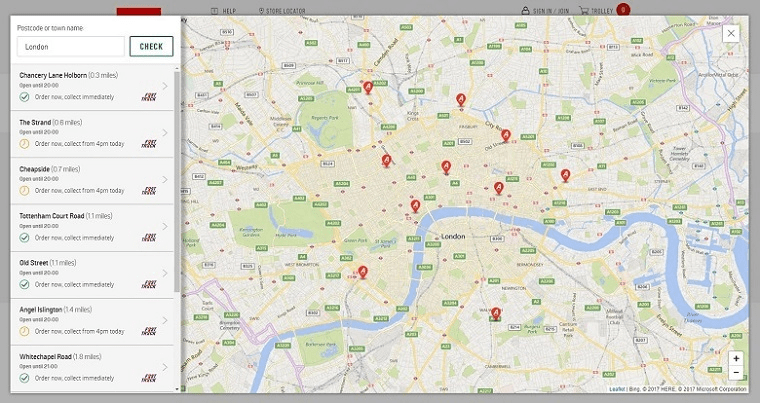
Currently, more and more retailers gradually realised the importance of digital business model, they started to build their online platform, however, this does not mean that their websites can bring consumers a more convenient shopping experience, but Argos has achieved this. According to Caroline (2018), the Argos website receives 1.2 billion clicks annually and claimed the title of the third most visited retail website in the UK (after Amazon and eBay). For a retail website, stock visibility is a highly important factor (Danny, 2015), Argos allows customers to check whether an item is available on its product page. The checking system responds very fast, providing customers a map with a list of nearby stores, customers can easily know when and where the item is available to pick up.
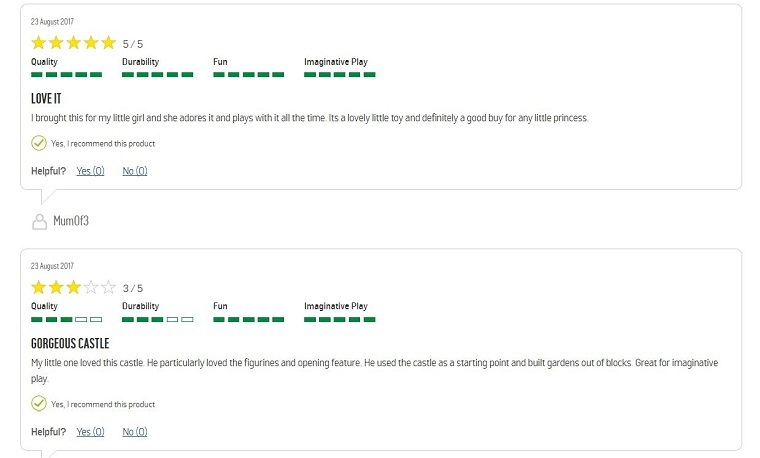
Besides, Argos offers customers a digital rating option. Consumers can rate a product out of 5 stars from different aspects. For example, they can rate a toy on “quality”, “durability” and “fun”. They can also remain their reviews towards the item in detail. By doing so, customers can learn the product information they most care about from the feedback of other customers. The feedback from consumers also makes the product information more reliable. In addition to the rating system, Argos also provides recommendations and alternatives to users to help them in making a definitive buying decision. Besides the website, Argos has also noticed the rising trend of mobile shopping. It has never stopped improving the functionality of its app to make it more user-friendly. Argos’ app covers almost all the functions of its website, additionally, geo-location technology allows the retailer to target customers with relevant and location-related messaging, and a barcode scanner lets customers instantly bring up more information about items in the catalogue. The app can not only meet the needs of people’s mobile shopping but also present the relevant information of physical stores. Through this way, Argos can better align its digital platforms with its physical channel.
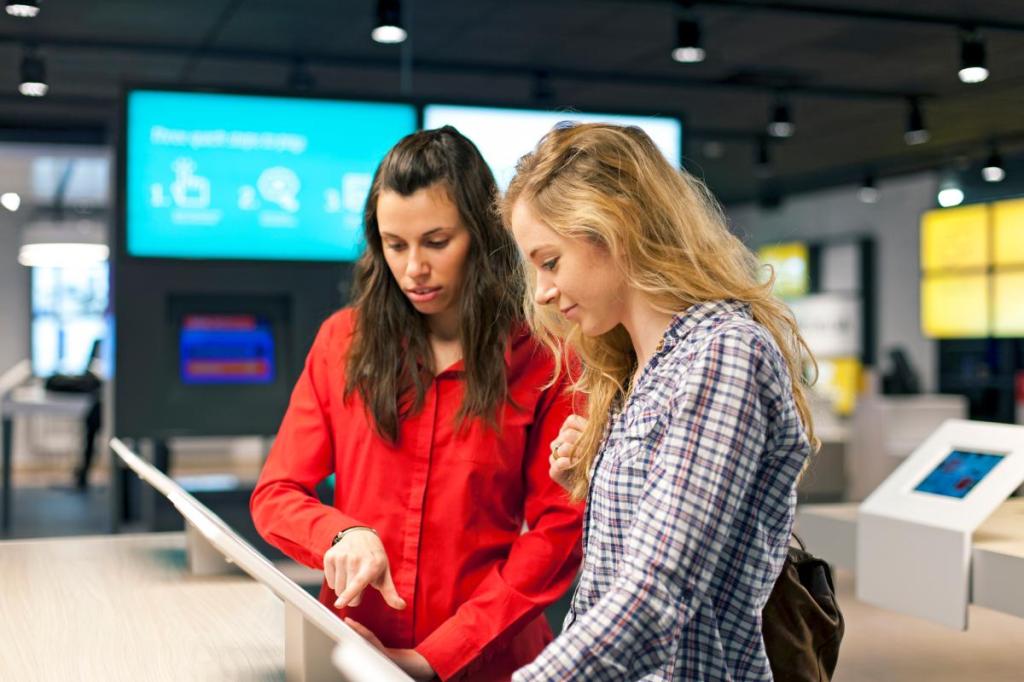
Apart from its online platform, Argos has also invested heavily in in-store digital technologies, notably replacing its famous laminated catalogues and pencils with tablet devices (Ben, 2016). Instead of writing down the item number on the small card and waiting in the long queue for paying at the cashier, customers currently can complete the purchase much quicker on the tablet devices. This undoubtedly helps both customers and sales assistants in saving their time. On the one hand, it brings convenience to customers, on the other hand, the salespeople can complete more transactions at the same time.

One key area of online and offline alignment for Argos is its “click and collect” service. According to Chloe (2015), 72% of customers prefer to use this service when it is available. This service also leads to potential sales growth, as “click and collect” customers are reported to spend twice as much as regular shoppers (Chloe, 2016). It is obviously presented that the demand for this kind of service is evident. This service brings huge convenience to people who can’t be home to receive a delivery and do not want the hassle of chasing the courier. In this way, the customers can choose to collect their item at an Argos store near their workplace or home, and they will be notified when it is ready, then all they need to do is pick it up on their own time. In addition to “click and collect” service, Argos also offer “Fast Track” delivery, which means that customers can get same-day delivery if they make the purchase before 6pm. In comparison to competitors’ charging policies, such as Amazon’s prime monthly fee, Argos’s £3.95 one-off cost same-day delivery may be a very competitive option for customers. By offering more choice to customers for picking up items, Argos aims to providing them with fastest and most convenient shopping experience. To be specific, customers are no longer restricted to the retailer’s operating hours, they can enjoy the freedom to choose where and how they receive their items at their own convenience.

In conclusion, Argos is a typical example of applying digital business model successful in its operating. It uses digital technologies in each channel to optimise consumers’ shopping experience. Besides, its online and offline platforms are well combined to support each other, which provides consumers with more convenience and freedom of choice. In return, it also brings sales growth to Argos.
Reference
Ben, Davis. (2016). What’s now & next for digital technology in retail stores?
Retrieved from:https://econsultancy.com/what-s-now-next-for-digital-technology-in-retail-stores/
Caroline, Baldwin. (2018). Argos on how to combine online and physical retail.
Retrieved from:https://www.essentialretail.com/news/argos-online-and-physical-retail/
Chloe, Rigby. (2015) Digital transformation helps Argos owner report 32% profits rise.
Chloe, Young. (2016). Making the most of multichannel.
Retrieved from:https://econsultancy.com/making-the-most-of-multichannel-with-data-s-help/
Danny, Bluestone. (2015). Improving the multichannel customer experience.
Retrieved from: https://econsultancy.com/improving-the-multichannel-customer-experience/
Nikki, Gilliland. (2017). What makes Argos the UK’s top multichannel retailer? Retrieved from: https://econsultancy.com/what-makes-argos-the-uk-s-top-multichannel-retailer/
 Yichi's Blog
Hi Yichi, interesting read!
Given that Argos, prior to technological advancements provided a unique shopping experience – with its use of catalogues, writing out an order slip and queuing to pay to buy items, do you think adopting a digital business model was a natural progression for the company, and a transition much more easily adopted?
Further, with the speed and convenience of Argos’ ‘Fast Track’ system – whereby customers can pick up a delivery on the same day on orders before 6pm, and Argos offering consumers the choice of four delivery slots or a two-hour window (Gilliand, 2017) – do you think this could rival Amazon Prime’s next day delivery? Especially given the uncertainty of Britain’s postal services and inconvenience of waiting all day for an Amazon delivery and that Amazon has begun opening brick and mortar stores, with one reason to offset the rising costs of shipping which puts pressure on their supply chain (Schaverien, 2018).
References
Gilliand, N., (2017). Econsultancy: What makes Argos the UK’s top multichannel retailer? Retrieved March 09, 2020 from
https://econsultancy.com/what-makes-argos-the-uk-s-top-multichannel-retailer/
Shaverien, A., (2018). Five Reasons Why Amazon Is Moving into Bricks-And_Mortar Retail. Retrieved March 09, 2020 from https://www.forbes.com/sites/annaschaverien/2018/12/29/amazon-online-offline-store-retail/#7e167cb55128
赞赞
dear Yichi, this is a fantastic work. Jingdong come to my mind after reading ur work, I think they are same besides Jingdong doesn’t have a physical shop, aren’t they? the service that customer can get their goods one day later helps Jingdong become a big competitor of Taobao. Jingdong don’t have a physical shop that helps them saving cost but argos’ shop can provide more convenience to customers, which one is better in ur opinion?
赞赞
Hi,Yichi. Before I went abroad to study, I didn’t feel much about online retail brands. After coming to the UK, I found that the most different aspect of this industry from China is the brand’s purpose of serving customers. There is a very strong competitive relationship between these retail brands in the UK, and major brands need to improve their outlets to serve more customers. For example, Tesco, Waitrose and iceland. Due to the geographical location and market environment, customers have a strong demand for home delivery, so most customers tend to order online platforms.In order to attract customers, these brands will launch various discounts and cooperation between brands to promote market exchanges.
赞赞